
Two Suitcases, a Laptop, and a Lot of Questions: My First 30 Days Living in Chiang Mai, Thailand
I arrived in Chiang Mai with two suitcases, a laptop, and a long list of questions. Some of those questions were ones I'd heard from clients for months: Which visa do I need? How do I find affordable long-term accommodation? What does everyday life actually cost when you're not on vacation?
But the deeper questions, the ones that kept surfacing over coffee and long walks through the Nimmanhaemin neighborhood, were the ones that really mattered:
What does it feel like to live here? What is the vibe of this place? What kinds of people build a life in Chiang Mai, and would I feel like I belong among them? What do expats here do for work, to fill their days, and for fun? And the biggest one of all: Does living in Chiang Mai feel like freedom and a genuine reset or does it just come with a different set of problems?
I came here, in part for myself, to test whether this chapter fits my own life. But I also came as your boots on the ground. Because if you're an American weighing a life abroad, whether you're coming out of military service, wrapping up a government career, or simply done waiting for the right time, you deserve a real answer, not a highlight reel.
Here's what 30 days taught me.
First Things First: Why Chiang Mai?
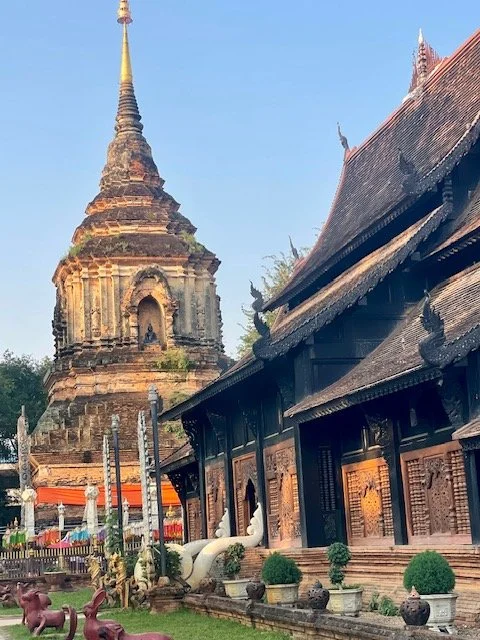
Chiang Mai is not Bangkok. That distinction matters. Bangkok is dazzling, chaotic, enormous, and wonderful for a visit, but it's a megacity, and megacity living comes with megacity pace and megacity cost. Chiang Mai is Thailand's second-largest city, but it carries itself more like a big college town: manageable, walkable in the areas that matter, culturally rich, and deeply liveable.
It sits in a valley in Northern Thailand, ringed by mountains and dotted with Buddhist temples. The air is cooler than the south (though 'cool' is relative. I mean, this is still Southeast Asia). The Old City, surrounded by its ancient moat, holds centuries of history. And neighborhoods like Nimman, where I've been based, have evolved into a hub where Thai creatives, international students, long-term expats, and digital nomads all coexist in a way that feels organic rather than manufactured.
For the audience I work with, military retirees, government service alumni, and Americans in their 40s, 50s, and 60s who are done with the grind and ready for something intentional, Chiang Mai keeps coming up. Not because it's trendy, but because it delivers on the things that matter most: safety, affordability, community, access to good healthcare, and a pace of life that lets you actually breathe.
So What Is the Vibe, Really?
This is the question I get most often, and it's the hardest one to answer from a distance, which is exactly why I'm here.
The honest answer: Chiang Mai has a gentle confidence about it. It's not trying to impress you. The temples are old and magnificent because they're old and magnificent, not because they've been polished for Instagram. The food markets are for locals first, visitors second. The people are warm in a way that feels genuine rather than performative; a cultural quality the Thais call 'jai dee,' or 'good heart,' and you feel it in small interactions constantly.
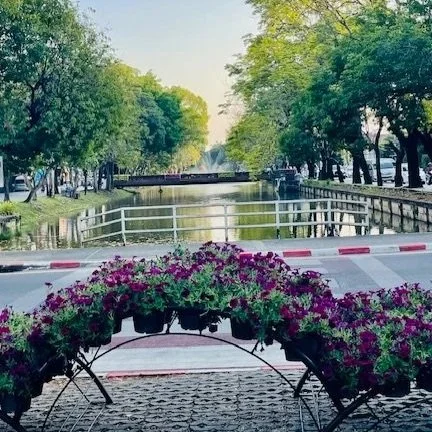
What it is not: loud, pushy, overwhelming, or status-driven. If you've spent decades in environments that rewarded rank, performance metrics, and constant urgency (and you're quietly exhausted by that) Chiang Mai can feel like putting down a weight you forgot you were carrying.
Adjusting can take some time, especially when it comes to a few key differences. Life tends to move on “Thai time,” so things don’t always happen quickly. Bureaucracy can feel slow and occasionally illogical. Outside of expat areas, not everything is labeled in English, which can be challenging at first. The heat and humidity are intense and very real. Additionally, air quality can drop during the agricultural burning season (typically February through April). While it’s generally not as severe as in some major high-pollution cities, it’s still an important consideration that often doesn’t make it into the glossy brochures. If you have respiratory sensitivities, this is something you’ll want to take seriously.
“A NOTE FOR THE PRACTICAL AMONG YOU:
I know some of you are reading this thinking: this all sounds nice, but what does it look like day-to-day? What do I actually do on a Tuesday? That’s exactly the right question, and it’s the one we’ll dig into in the sections below.”
Who Lives Here and Would You Fit In?
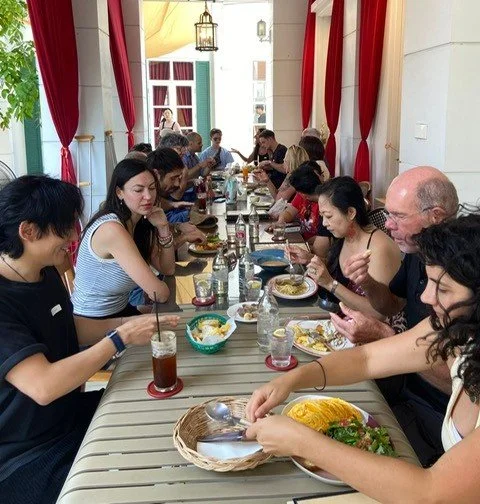
The expat community in Chiang Mai is more diverse than most people expect. Here's a rough picture of who you'll find:
The Long-Term Retirees
Many of the people who've been here the longest are retirees., some from military or government backgrounds, some from corporate careers, who found Thailand in their 40s, 50s or 60s and never left. They know the good hospitals, the trustworthy visa agents, the best markets, and the immigration rules better than most attorneys. They are almost universally willing to share what they know with newcomers. This community is one of Chiang Mai's greatest hidden assets.
The Digital Nomads and Remote Workers
Chiang Mai has long been considered the unofficial capital of digital nomadism in Southeast Asia. The co-working spaces are excellent and affordable, the internet is fast (mostly), and the infrastructure for location-independent work is mature. These tend to be younger (30s and 40s) though the demographic is shifting as more mid-career Americans go remote. The AI and tech communities here are particularly active; I've attended workshops here that I would have had to travel to a major U.S. city to find at home.
The Wellness and Intentional Living Community
Yoga studios, sound healing practitioners, meditation retreats, holistic health providers; Chiang Mai has a deep and thriving wellness community. This isn't fringe; it's woven into the fabric of daily life in a way that's accessible without being prescriptive. Whether that's your world or you're just curious, the infrastructure is there. I've found that the people drawn to this space tend to be thoughtful, low-drama, and interesting to know. I have enjoyed attending Yoga Nidra, tradition Gong sound baths, and even a full moon ceremony.
The “I Came for a Month and Never Left” Crowd
You will meet more people than you expect who came on a tourist visa, felt something shift, scrambled to figure out a longer-stay option, and quietly rebuilt their lives here. Their stories are instructive, but not because you should replicate their path. They simply provide an answer to the question 'is this sustainable?' with lived evidence.
“THE COACHING QUESTION:
Before you decide whether this community is your community, ask yourself: What do I need from the people around me to feel at home? Do these groups reflect any version of who I am or who I want to become?”
What Do People Actually Do Here?
This question comes up constantly, especially from people who've built identities around their careers. 'But what will I do all day?' It's worth taking seriously, because idle hands and an unstructured life can undermine even the most beautiful location.
For Those Still Working Remotely
If you're working remotely for a U.S. company or running an online business, the infrastructure here fully supports that life. Co-working spaces in Nimman are professional and social. Here, you'll find community alongside productivity. The time zone difference from the U.S. is significant (Chiang Mai is 11 to 14 hours ahead depending on your home zone), which is a genuine logistical consideration that some people adapt to easily and others find difficult. It's worth thinking through honestly before you commit.
For Those Done Working

If you're coming out the other side of a military or government career and the idea of 'not working' feels both appealing and slightly terrifying; this community will show you what filling your days with meaning looks like when it's no longer tied to a job title. Language classes. Cooking courses. Temple restoration volunteer projects. Day trips to hill tribe villages, waterfalls, and ancient ruins. Weekend excursions to the rest of Southeast Asia, which is remarkably accessible and affordable from here. Volunteering with expat-organized community programs.
The people who thrive here don't sit on the couch. They stay curious. They stay engaged. They just do it at their own pace, on their own terms, without a performance review waiting at the end of the quarter.
For Those in Transition
Some of the most interesting people I've met in Chiang Mai are in the middle of something. They are figuring out the next business, writing a book they've been postponing for twenty years, healing from something hard, or simply giving themselves permission to think clearly for the first time in a long time. Thailand, and Chiang Mai specifically, seems to create space for that kind of becoming.
The Financial Reality: What Does It Actually Cost?
Let's be concrete, because vague promises of 'affordable living' don't help you plan.
Housing in the Nimman area, in a well-located, comfortable apartment with air conditioning, WiFi, and standard amenities, runs roughly $400 to $800 USD per month depending on size and building quality. You can pay less in other neighborhoods; you can pay more if you want something truly premium. Long-term rentals (three months or more) consistently come in below short-term rates, so your timeline matters.

Food is genuinely one of the great pleasures and bargains of life here. A full meal from a local restaurant or market stall runs $2 to $5 USD. Street food is excellent and safe, contrary to the anxious myths. Western-style dining and international restaurants are available in Nimman for $10 to $20 a meal when you want them. Most expats find they eat better here, for significantly less, than they did at home.
Healthcare is one of the things that genuinely surprises people. Quality private hospital care in Chiang Mai is excellent and a fraction of U.S. costs. A doctor's visit runs $20 to $50. International health insurance is strongly recommended and, for most people, runs $100 to $250 per month depending on age and coverage level, but still dramatically less than comparable U.S. coverage.
The number that varies most dramatically from person to person is lifestyle spending: travel within Thailand and Southeast Asia, yoga and fitness memberships, social activities, shopping, and the comfort expenditures that help people feel settled during a transition. Budget honestly for those, because they tend to creep.
A reasonable working estimate for a comfortable, active life in Chiang Mai (not roughing it, not living extravagantly) is $1,500 to $2,500 USD per month for a single person. Couples often find strong economies of scale. Those coming out of military retirement or government pensions frequently find their income goes dramatically further here than it ever did stateside.
The Visa Question: An Honest Overview
I want to give you enough here to have an informed conversation , with an immigration attorney, with fellow expats, or with me and without positioning this as legal guidance. That's not my role, and getting visa specifics wrong is not something I'm willing to do to you.
Here is the practical landscape as I understand it currently:
The Tourist Entry: Your Starting Point
Americans arriving in Thailand currently receive a visa exemption at the airport, typically 30 days, sometimes 60 days depending on entry point and current policy. A pre-arranged tourist visa applied for at a Thai consulate before departure can provide 60 days, with a possible 30-day extension inside Thailand at a local immigration office for a modest fee, which giving you up to 90 days total.
“⚠️ HEADS UP:
As of this writing, the Thai government is in active discussions about reducing the tourist visa extension from 30 days to just 15, which would bring the maximum tourist stay to 75 days. Nothing is finalized, but this is the kind of policy shift that can move quickly. If you’re planning a longer scouting trip, don’t build your timeline around maximum tourist extensions without checking current policy closer to your travel date.”
The tourist visa is excellent for a well-planned scouting trip, which I'll argue is the essential first step for anyone seriously considering Thailand. It is not a sustainable long-term living strategy. Thailand has made it clear they're moving away from the 'perpetual tourist' model.
The Destination Thailand Visa (DTV): For Remote Workers
Launched in 2024, the DTV is Thailand's answer to the global digital nomad visa wave. It's designed for people working remotely for employers or clients outside Thailand. This is a five-year, multi-entry visa with generous stays per entry. It requires financial documentation and proof of remote work, and must be applied for before you arrive (or at least, outside of Thailand) If you're working remotely and Thailand is on your serious shortlist, this is the visa to research with a qualified immigration attorney. While many people can navigate this process on their own by consulting with others who have completed the process, it is less stressful to consult a professional.
The Retirement Visa: For Those 50 and Above
A long-standing and well-tested pathway for retirees, this visa requires being at least 50 years old and meeting financial thresholds through demonstrated income (a military or government pension often qualifies) or a bank deposit. It's renewed annually inside Thailand and does not permit employment. Many of the long-term American expats I've met in Chiang Mai are on this visa and describe the renewal process as manageable once you have a good local visa agent.
There are also longer-term options like the Long-Term Resident (LTR) visa for higher-income earners, as well as education and volunteer visa pathways that some expats use creatively. A qualified immigration attorney or a reputable visa service in Thailand is the right resource for navigating your specific situation.
“MY COACHING TAKE:
I talk to people who’ve spent six months deep in visa research before they’ve spent even one day asking whether the lifestyle is actually right for them. The visa is the how. The lifestyle fit question is the whether. Do the LIFESTYLE FIT work first!! Then get laser-focused on the HOW”
Freedom or a Different Set of Problems?
Let me come back to the question that started this whole piece, because it deserves a straight answer.
For the right person, and I want to be clear that this is not everyone, living in Chiang Mai genuinely does feel like freedom. Not the Instagram version of freedom, where every day is a perfect café and a golden sunset. Real freedom: the freedom from financial pressure that comes with a dramatically lower cost of living. The freedom from performance culture. The freedom to structure your days around what actually matters to you. The freedom that comes from stepping outside the noise of American life and being able to hear yourself think again. The freedom to reset your nervous system.

I have met people here who are lighter than they've been in years. Military retirees who spent decades in high-stress environments and found, to their own surprise, that they don't miss the grind. However, some do miss the purpose and they found new forms of it here. Government workers who discovered that the identity they thought was them was actually just the job. People who came thinking they were taking a break and realized they were actually just beginning a new chapter.
I have also met people who are struggling. Who are lonely in a way that the beautiful surroundings can't fix. Who made the move without adequate preparation (financial, emotional, or practical) and are now dealing with the consequences. Who found that the slower pace they thought they wanted actually triggers anxiety rather than relief.
This is why I do what I do. A beautiful destination and good intentions are not enough. Relocation readiness, truly knowing yourself, your needs, your financial reality, and your support requirements, is the difference between a next chapter that transforms you and one that just relocates your problems to a more photogenic backdrop.
The Most Important Thing I Can Tell You: Take a Scouting Trip First
After everything I've shared here, this is the piece of advice I am most confident in: do not make a major life relocation decision based on blog posts, YouTube videos, or Facebook group recommendations , including this one.
Come and see for yourself.
A well-planned scouting trip of 15 to 30 days is the single most valuable investment you can make in your relocation readiness. Not a vacation. Not a tourist trip. A deliberate, eyes-open experience designed to help you evaluate whether a place is actually right for your life — not someone else's.
There is a specific way to do a scouting trip that yields real information rather than impressions. It means staying in a neighborhood rather than a hotel. Cooking some of your meals instead of eating out for every single one. Riding local transportation. Walking and walking. Attending a community event. Having an honest conversation with someone who's been there for five years, not five days. Testing what your working day actually looks like from a café with Thai WiFi and a 12-hour time difference. Spending your days immersing into Thai culture, food, and language.
“📍 COMING SOON ON THE BLOG:
I’m writing a dedicated guide to maximizing your scouting trip — the what to do and what not to do during your 15 to 30 days on the ground. How to escape the tourist mindset and start seeing a country the way an expat does. How to use your limited time to answer the questions that actually predict whether you’ll be happy there. Watch for it — and sign up for the newsletter so you don’t miss it when it drops.”
My 30-Day Verdict
I'm still inside this chapter, watching it unfold. The tourist clock is ticking toward its end, and I'm making my own decisions about what comes next. What I can tell you honestly:

Chiang Mai is the real thing. The community, the cost of living, the quality of daily life, the warmth of this place — none of it is hype. For the right person, in the right season of life, with clear eyes and solid preparation, it genuinely delivers.
But 'the right person' is doing a lot of work in that sentence. That's the question I'm here to help you answer with honesty, practicality, and with your specific life in full view.
More coming from the ground in Chiang Mai: on the real cost of settling in, on what I'm learning from the long-termers, on navigating the practical side of expat life, and on the scouting trip guide that I think might be the most useful thing I've written for this community. Stay with me.
Is Thailand — or Life Abroad — On Your Mind?
You don't have to figure this out alone, and you don't have to do it by reading yourself into circles on the internet. That's what I'm here for.
As a relocation readiness coach, not a visa attorney (not a travel agency, not a real estate broker) my job is to help you get clear on whether a move abroad is right for you, what it would realistically look like for your life, and how to move from 'I've been thinking about this for years' to an actual, actionable plan.
If you're curious, skeptical, excited, or just quietly wondering whether there's a different way to live — let's talk.
→ Book your free 15-minute Ask Me Anything call at NextChapterNomads.com
No pitch. No pressure. Real answers for your real situation.
About Michelle Irwin
Michelle Irwin is a certified relocation readiness coach, ICF-accredited coach, and NLP practitioner. She helps Americans — including military retirees, government service veterans, and anyone ready for a next chapter outside the U.S. — navigate the decision to move abroad with clarity, confidence, and a real plan. She is currently on the ground in Chiang Mai, Thailand, doing the research so you don't have to guess.
Disclaimer: Visa and immigration information in this post is general in nature and reflects conditions as of early 2026. Requirements change frequently — sometimes quickly. Always confirm current requirements with the Royal Thai Embassy or a licensed immigration attorney before making decisions. Next Chapter Nomads is a relocation coaching service and is not a legal, immigration
