The honest answer to "how much money do I need to move abroad?" is that it depends. But "it depends" is not a plan so here is how I would work out a real number.
I live in Chiang Mai so I will use Thailand as the worked example. Your country will be different but the method stays the same. Count the one time costs of getting there and the monthly costs of living there. Add the costs people forget. Then build a cushion so one surprise does not end the dream.
All figures are approximate and in US dollars unless I say otherwise. Prices and visa rules change quickly so use this as a starting point and check official sources before you commit.
The one time costs of getting there
Plan on roughly $2,100 to $8,100 to get settled in Chiang Mai, depending on how much you bring and how fancy you want the first apartment.
Flight: $600 to $1,500 depending on where you fly from and how far ahead you book. Search flights on Kiwi.com.
Visa and paperwork: $300 to $1,000 for the visa fee and background check plus apostille and translations. The OA visa fee is 5,000 baht (about $150).
Moving or selling your things: $0 to $3,000 depending on whether you take two suitcases or a shipping container.
Housing upfront: $1,000 to $1,800 which is often a deposit plus the first month of rent.
Setting up: $200 to $800 for a phone and SIM and bedding and kitchen basics.
Total: $2,100 to $8,100
The biggest factor is how much you ship. Every box you sell or give away is money you keep. One easy win is an eSIM so your phone works the moment you land. Yesim is one I would try before you leave home.
What a month actually costs in Chiang Mai
For one person, a typical month in Chiang Mai runs about $1,000 and a comfortable one runs closer to $1,800. My Wise account puts the average at $1,032 a month. Other 2026 guides I checked land anywhere from about $870 for living the way a Thai resident does to about $1,830 inside the expat bubble.
Rent for a one bedroom in the city centre: $457
Groceries: $212
Utilities: $65
Internet: $19
Transport: $55
Eating out: $55
Other spending: about $188
Total for one person: $1,032
Rent and eating out are the numbers that moves the most. A simple place outside the centre costs much less and a modern condo with a pool costs much more. How often you eat out and whether you run the air conditioning all day are the next two. However, I haven’t seen a huge difference in utilites in months I never ran the AC to months I did. The average without AC is 500-700THB/15-20$ and with is approximately $1000-1200THB/30-35$ for my 1 bedroom condo.
Health insurance is not in this list. I cover it in the next section so it does not get lost.

My real month in Chiang Mai
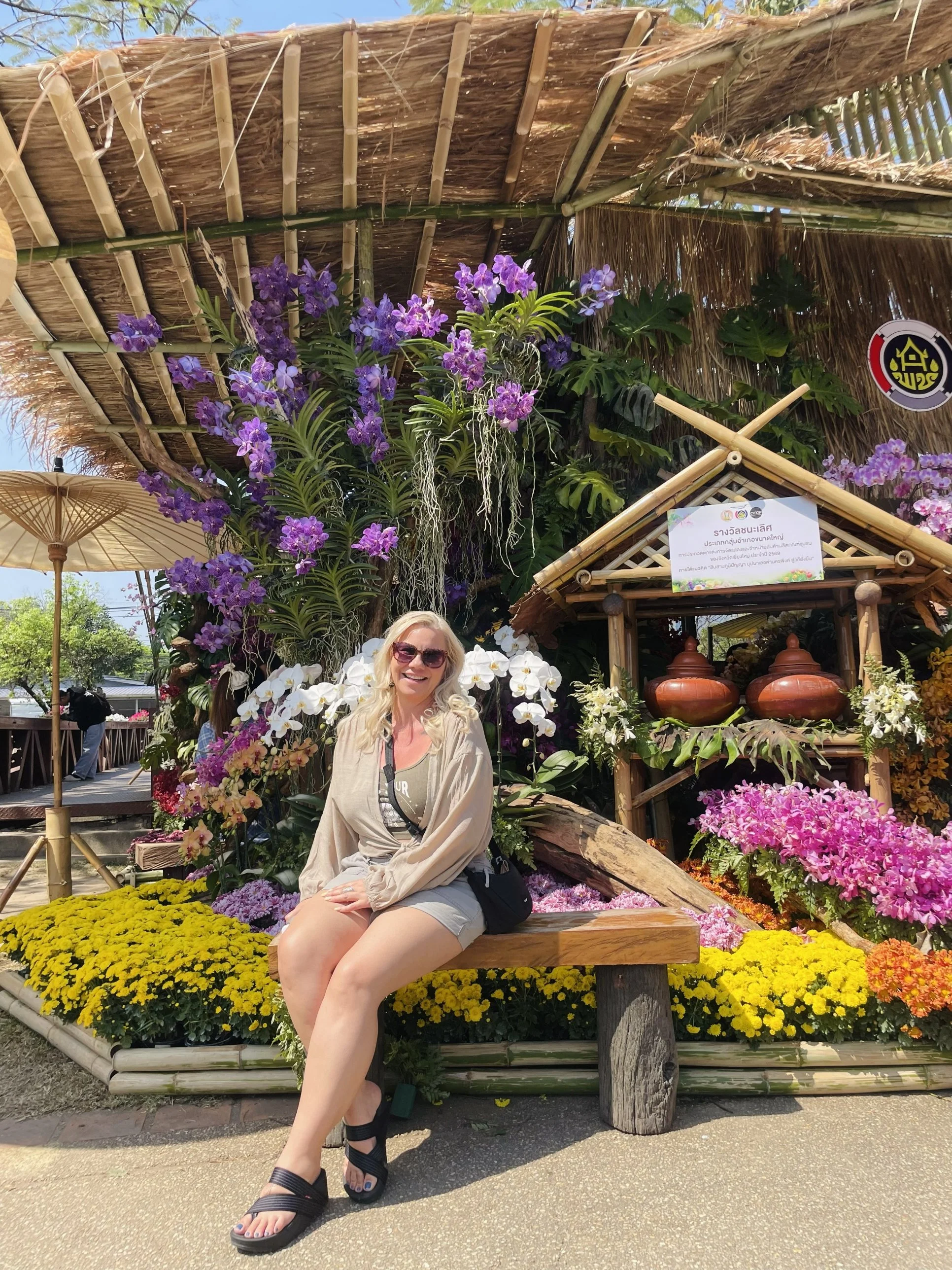
Averages are helpful but I want you to see an actual budget. I rent a studio for 12,000 baht a month. It includes access to a lap pool and a gym with yoga and zumba classes included. My housing deposit was 30,000 baht (about $910). I live in an easy walking area so I only take a Grab or Bolt when I need one. I work online to supplement my savings and investments so these numbers are what I spend and not what I earn.
Studio rent with pool and gym and classes: 12,000 baht ($364)
Wifi: 563 baht ($17)
Water: 50 baht ($2)
Electricity: 500 to 1,000 baht ($15 to $30)
Cell phone with unlimited data and a Thai number: 563 baht ($17)
Grab and Bolt: 4,000 baht ($121)
Groceries: 6,500 to 7,000 baht ($197 to $212)
Coffee and entertainment and eating out: 11,000 to 12,000 baht ($333 to $364)
Toiletries: 1,200 baht ($36)
Miscellaneous: 2,000 baht ($61)
Health insurance (Tricare for Life): about 1,950 baht ($59)
Trips outside Chiang Mai ($400 to $500 every 3 months): about 4,400 to 5,500 baht ($133 to $167)
Total: about 44,750 to 47,850 baht (about $1,360 to $1,450)
*I used approximately 33 baht to the U.S. dollar for these conversions.
I have Tricare for Life so my health insurance is only about $59 a month. Most nomads will not have that so use the insurance numbers in the costs people forget section for your own plan. Electricity is the number that moves around and eating out is the one I control. When I want to get out of the city I book day trips and tours through Klook.
These figures do not include streaming services or a VPN (which I need to work in the US) or business expenses or anything I am still paying off in the States.
My total lands above the $1,032 average and inside the comfortable range. Plus, it already includes my insurance and a trip outside Chiang Mai every three months which most budgets leave out.
The costs people forget
These are the line items that catch women off guard usually in month three.
Health insurance. This one depends heavily on your age. SafetyWing Nomad Insurance Essential runs about $56 to $63 per 4 weeks under 40 and about $92 in your 40s and about $145 in your 50s and up to about $197 in your 60s. It is travel medical coverage and not a full health plan. A comprehensive international plan from Cigna Global or Allianz Care or AXA runs roughly $150 to $400 a month depending on your age and coverage. Local Thai plans can be cheaper but some stop accepting new members around 60 or 65 so it pays to sort this out early.
Visa money you park but do not spend. If you are 50 or older, the Thai retirement extension needs 800,000 baht (about $24,000) in a Thai bank account in your own name. It has to sit there for at least two months before you apply and three months after. Afterward the balance can drop to 400,000 baht. It is still your money but you cannot count it as spending cash.
Insurance rules depend on the visa. The OA visa requires 3,000,000 baht of health cover. The retirement extension does not require insurance but I would still buy it.
US taxes. American citizens still file a US return from abroad. Budget for a preparer who understands expat filing.
Trips home and flights for family. One or two visits a year add up quickly.
The learning curve. Your first two or three months will include a few expensive mistakes. A small cushion makes them annoying instead of scary.
Put it together: a realistic first year
For one woman, in Chiang Mai, a realistic first year costs about $15,000 to $35,000 before the visa money you park and a cushion. Here is how that adds up.
One time costs: $2,100 to $8,100
12 months of living at $1,000 to $1,800: $12,000 to $21,600
Health insurance for the year: $800 to $4,800
First year total: $14,900 to $34,500
The low end assumes simple housing and mostly local food and a basic insurance plan. The high end assumes a nicer apartment and regular eating out and a stronger plan.
Then, add two more lines that sit outside the total.
A cushion of three to six months of living costs. That is roughly $3,000 to $10,800 in Chiang Mai.
Visa funds if you need them such as the 800,000 baht (about $24,000) for the retirement extension.
The insurance line starts with SafetyWing at about $56 to $63 per 4 weeks for ages under 40 which comes to about $800 a year. It tops out at a comprehensive international plan at about $400 a month. If you are in your 50s or 60s expect to land higher. SafetyWing in your 50s is about $145 per 4 weeks or roughly $1,900 a year.
To build your own number, swap in your country and your rent and your age. Ask yourself three questions. What is my real rent? What will my insurance cost at my age? What does my visa make me prove?
Want a head start? My free resources are a good place to begin and my Travel Tools and Deals page lists the tools I use myself. New here? Start here.
Thinking about your own next chapter?
A budget gets a lot less scary once it has your name on it. If you want help turning these ranges into a number for your own country and income route and timeline I would love to work with you. My six week small group course Clarity Before Countries starts January 4 2027 and you can reserve your seat for $99. Only 6 seats.
Not ready for a course? Book a free 15 minute Ask Me Anything call and bring your questions.
Also read: Choosing a Country in 2026: Visa Changes Every American Should Know.
Some links in this post are affiliate links. If you book through them I may earn a small commission at no extra cost to you. Costs and visa rules change quickly so these figures are estimates. Check your embassy and official immigration sites before you plan around them.